How to identify

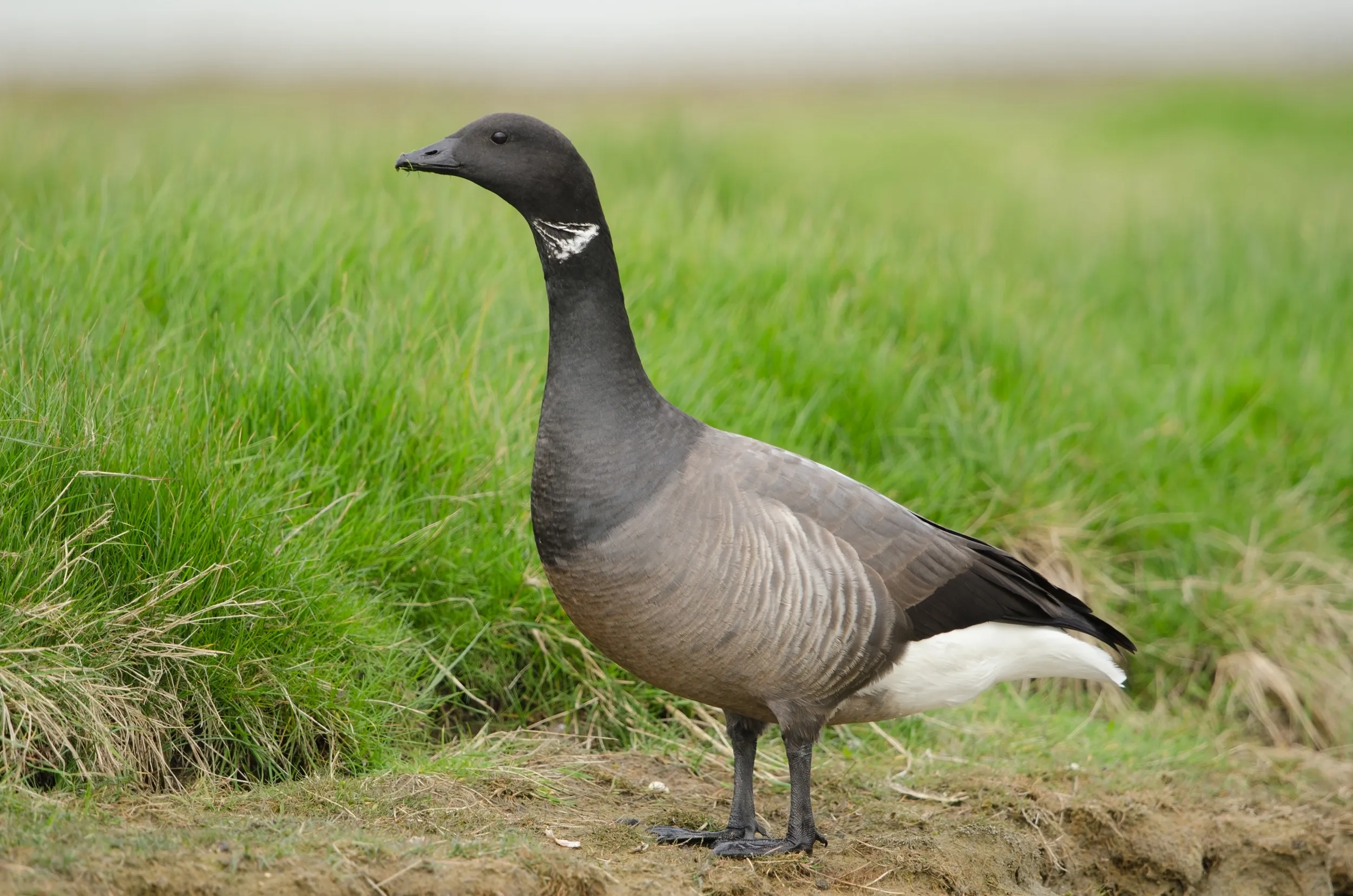
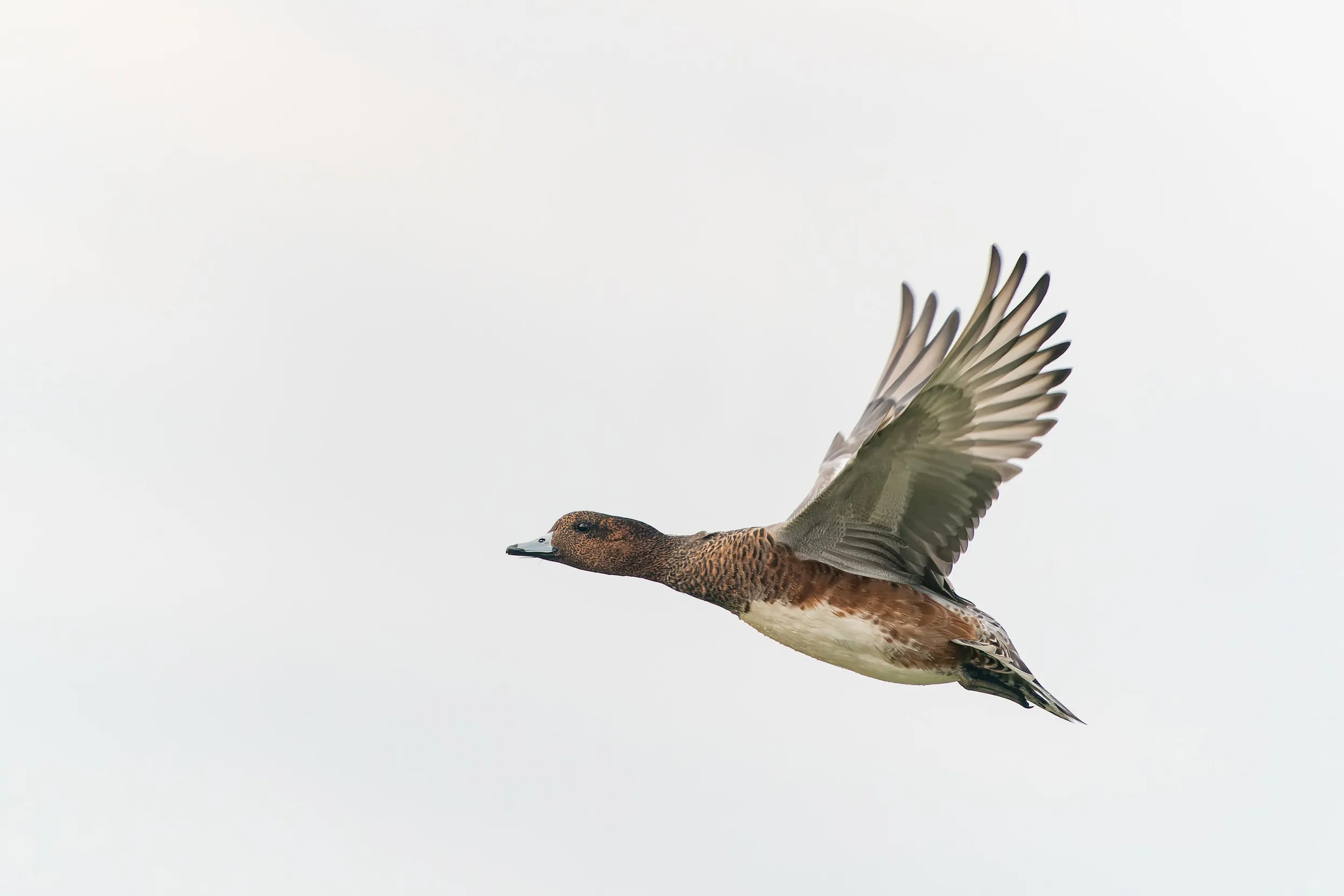
The Brent Goose is a small, dark goose - of similar size to a Mallard. It has a black head and neck and grey-brown back, with either a pale or dark belly, depending on the sub-species. Adults have a small white neck patch. It flies in loose flocks along the coast, rather than in tight skeins like Grey Geese. It is an Amber List species because of the important numbers found at just a few sites.

Call

Brent Goose

David Farrow / xeno-canto

Key features to look out for

  • Our smallest goose – about the size of a Mallard
  • Black head and neck with a small white patch on the side of the neck
  • Short black beak
  • Pale or dark belly – depending on the subspecies

Conservation status

Brent Geese are currently on the Amber List of Birds of Conservation Concern. While their global population is stable, they rely heavily on protected coastal habitats, which are vulnerable to development and climate change.

Where and when to see them

Difficulty rating - Easy to Medium

Brent Geese often gather in large flocks, making them easy to spot if you’re in the right place.

Brent Geese are coastal specialists. Look for them on estuaries, saltmarshes, and mudflats, where they feed on eelgrass, marine algae and saltmarsh plants. You might also see some birds, especially in southern England, feeding on grassland.

Key

  1. Resident
  2. Passage
  3. Summer
  4. Winter
* This map is intended as a guide. It shows general distribution rather than detailed, localised populations.
  1. Jan
  2. Feb
  3. Mar
  4. Apr
  5. May
  6. Jun
  7. Jul
  8. Aug
  9. Sep
  10. Oct
  11. Nov
  12. Dec

Where best to see them

Brent Geese, flock grazing in front of marina
Brent Geese
Birds of the month

Head outside and discover fascinating birds each month. Read on for top ID tips, what to listen for, and where to see them.

Key facts