How to identify

These noisy and sociable birds are found around the world, thanks to their cheerful ability to make the most of humanity's rubbish and wastefulness. But monitoring suggests a severe decline in the UK House Sparrow population, recently estimated as dropping by 71% between 1977 and 2008 with large falls in both rural and urban populations. Their numbers are still dropping in England, Breeding Bird Survey data indicates recent population increases in Scotland, Wales and Northern Ireland.

Call

House Sparrow

Jarek Matusiak / xeno-canto

Key features to look out for

  • Small birds, about the size of a Chaffinch 
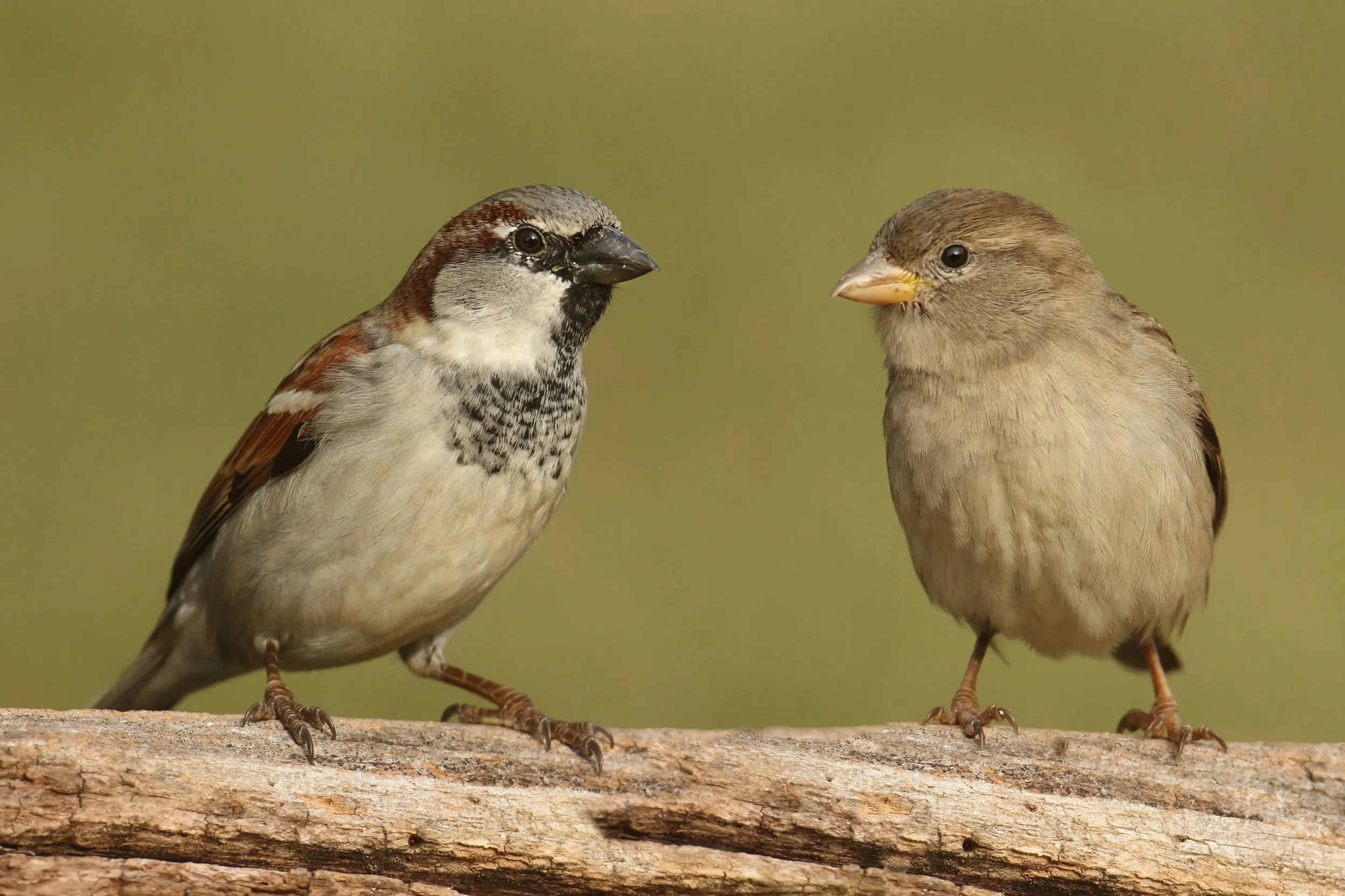
  • Males and females look very different, juveniles look similar to females 
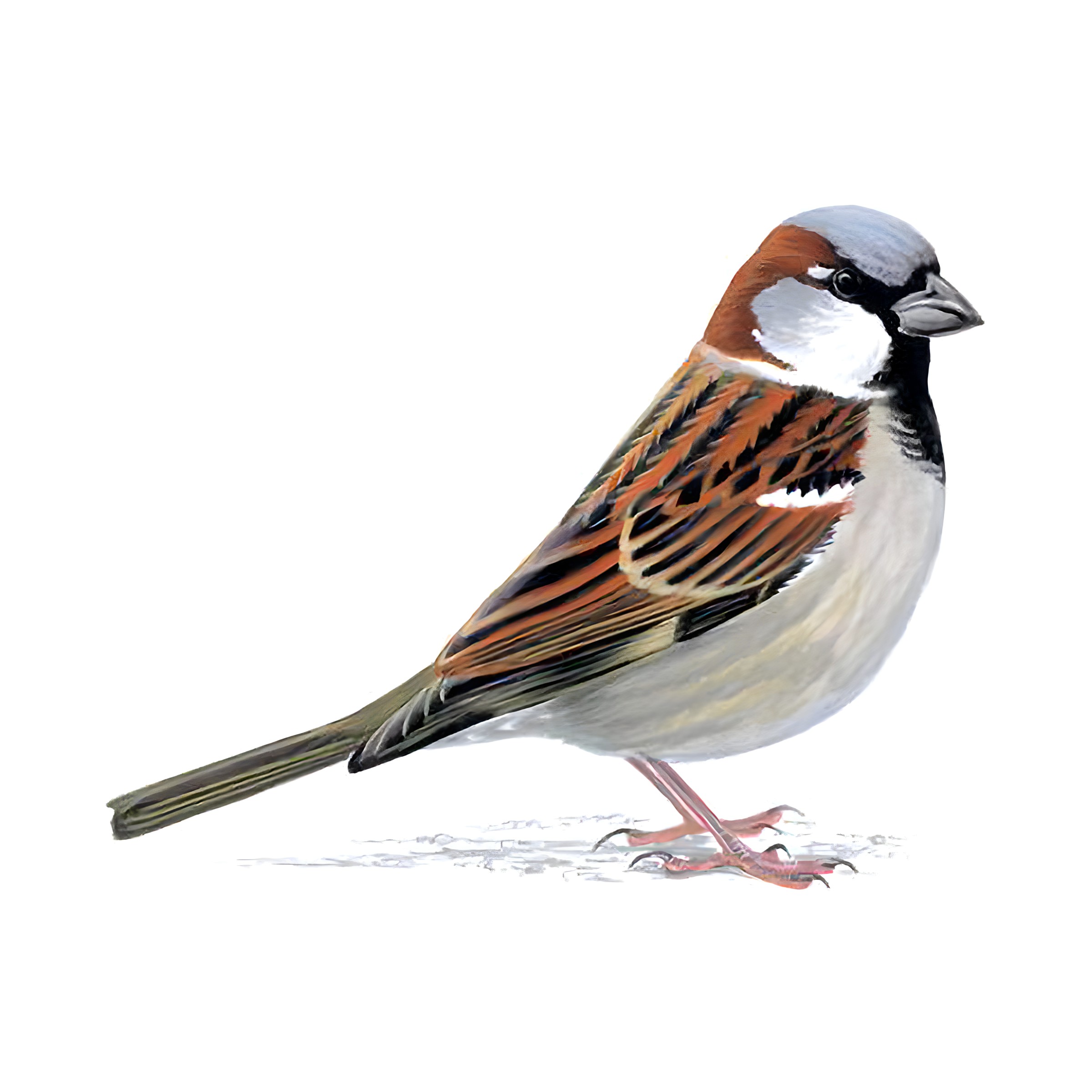
  • Males have a chestnut brown back with black markings, pale grey underparts and a black bib, which can vary in size. They have a chestnut brown head, grey cap and grey cheeks.  
  • Females and juveniles have a brown back with black markings, a pale chest without the bib, and much simpler markings on their heads. They usually have a pale yellow stripe behind their eyes. 
  • Short, chunky beak 
House Sparrow perched on a wooden fence.
House Sparrow
Small brown birds you might see in your garden

Have you seen a small, brown bird in your garden and you’re not sure what it is? There are lots of potential contenders, so take a look at these ID tips to help you to work out the identity of your mystery bird.

Conservation status

Despite their Big Garden Birdwatch success, numbers of House Sparrows have dropped by 60% in the past 45 years. In 2002, House Sparrows were added to the Red List of Conservation Concern. 

Did you know?

House Sparrows are much rarer than they used to be – since 1970, almost 30 million of these little birds have vanished from the UK. 

Where and when to see them

House Sparrows have lived alongside humans for centuries, taking advantage of spilt grain and food scraps.

You might also spot them hopping about on city streets, in stations and parks, as well as out in the countryside in hedgerows and on agricultural fields. 

Difficulty rating - Very easy

They’re the most common bird seen during the Big Garden Birdwatch and if you put up feeders you’re almost certain to see them (they particularly love fat balls and sunflower hearts).

Key

  1. Resident
  2. Passage
  3. Summer
  4. Winter
* This map is intended as a guide. It shows general distribution rather than detailed, localised populations.
  1. Jan
  2. Feb
  3. Mar
  4. Apr
  5. May
  6. Jun
  7. Jul
  8. Aug
  9. Sep
  10. Oct
  11. Nov
  12. Dec

Behaviour

House Sparrows are sociable birds and often live in small groups, close to people. In fact, they’ve lived alongside humans for centuries, taking advantage of spilt grain and food scraps. 

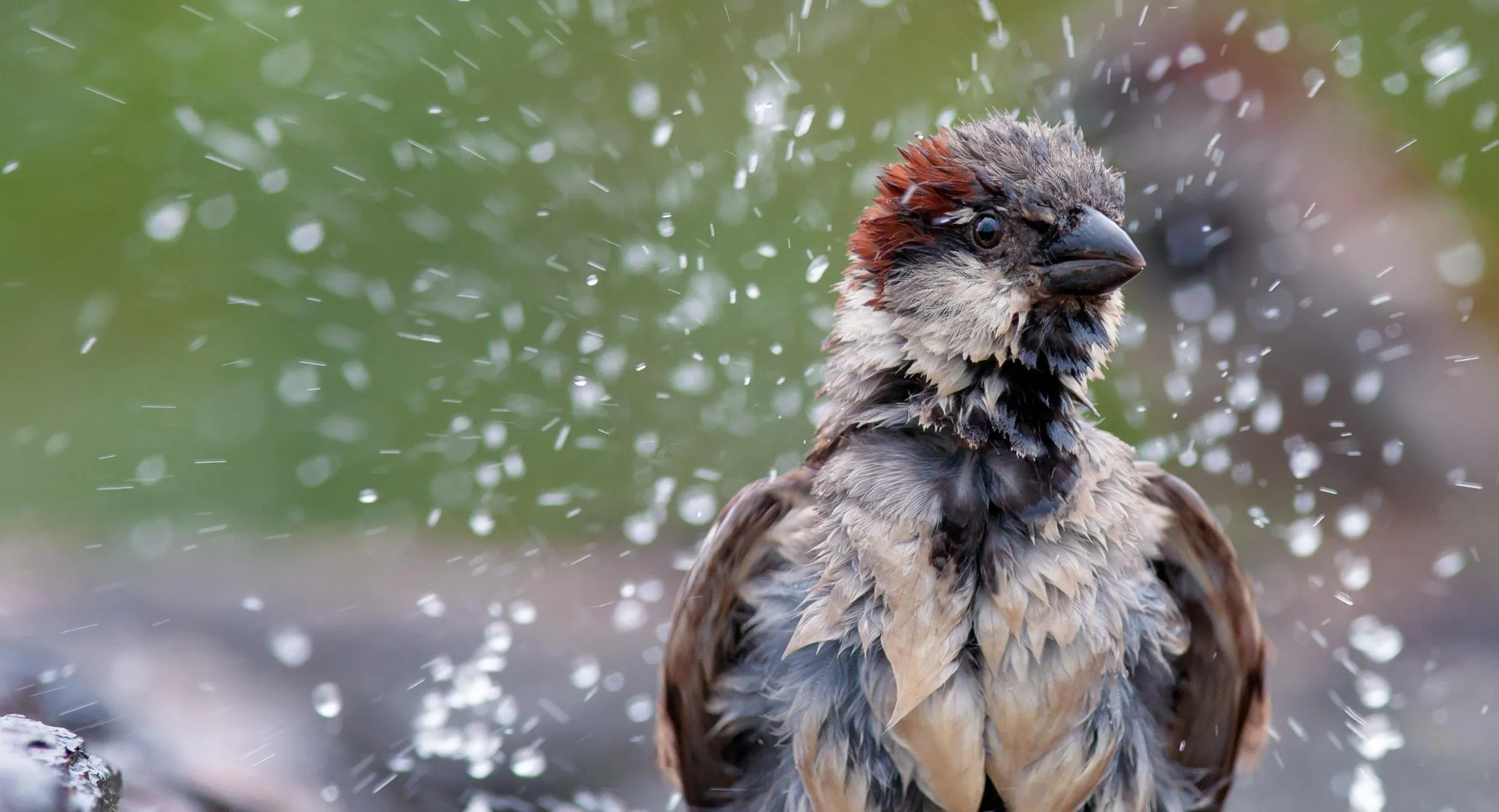
You’ll often see them hopping around on the ground in groups, or bathing together in a birdbath or pond. They will also happily use bird feeders.

House Sparrows have quite short wings and aren’t strong fliers, so they like to stick close to vegetation, ready to dash for cover if a predator appears.

Call/song

The commonest call is a basic, but often very loud, ‘cheep cheep’. Their song is just this cheep repeated over and over again.

In spring, you might hear groups of House Sparrows calling at once from deep within hedges and bushes, making a cheery, chirpy chorus. They also sometimes make a scolding chur, which can be an alarm call.

When and where to hear them?

All year round – but you’re most likely to hear them singing in spring.

House Sparrows have adapted well to living alongside humans and are regular visitors to gardens, along with being a regular sight in towns and cities. They’ve taken the number one spot on Big Garden Birdwatch for 21 years, but their populations are still facing severe declines.

Nesting

House Sparrows like to nest in holes or crevices in buildings, but will also nest in hedges or use nest boxes.

Protect our House Sparrows

They’ve lived alongside humans for thousands of years, and they’ve also taken the top spot of the Big Garden Birdwatch for more than 20 years. But House Sparrows are a lot rarer than they used to be.

Since 1970, almost 30 million House Sparrows have vanished from the UK, which means they’re now on the UK Red List of Birds of Conservation Concern.

Protect Our Birds, Defend Our Nature

A House Sparrow bathing in a small pool, throwing splashes of water about.
House Sparrow
Birds of the month

Head outside and discover fascinating birds each month. Read on for top ID tips, what to listen for, and where to see them.

Key facts