How to identify

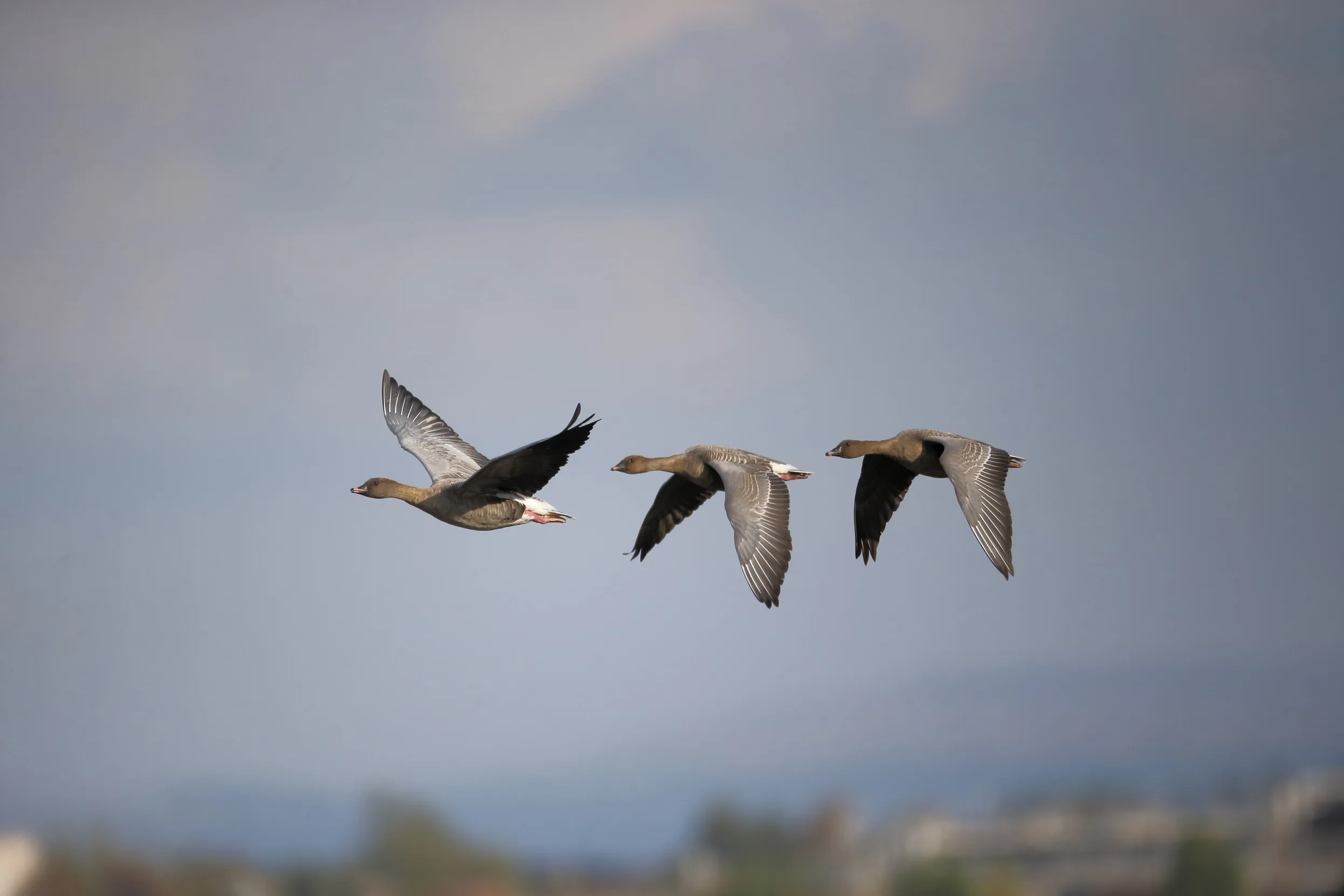
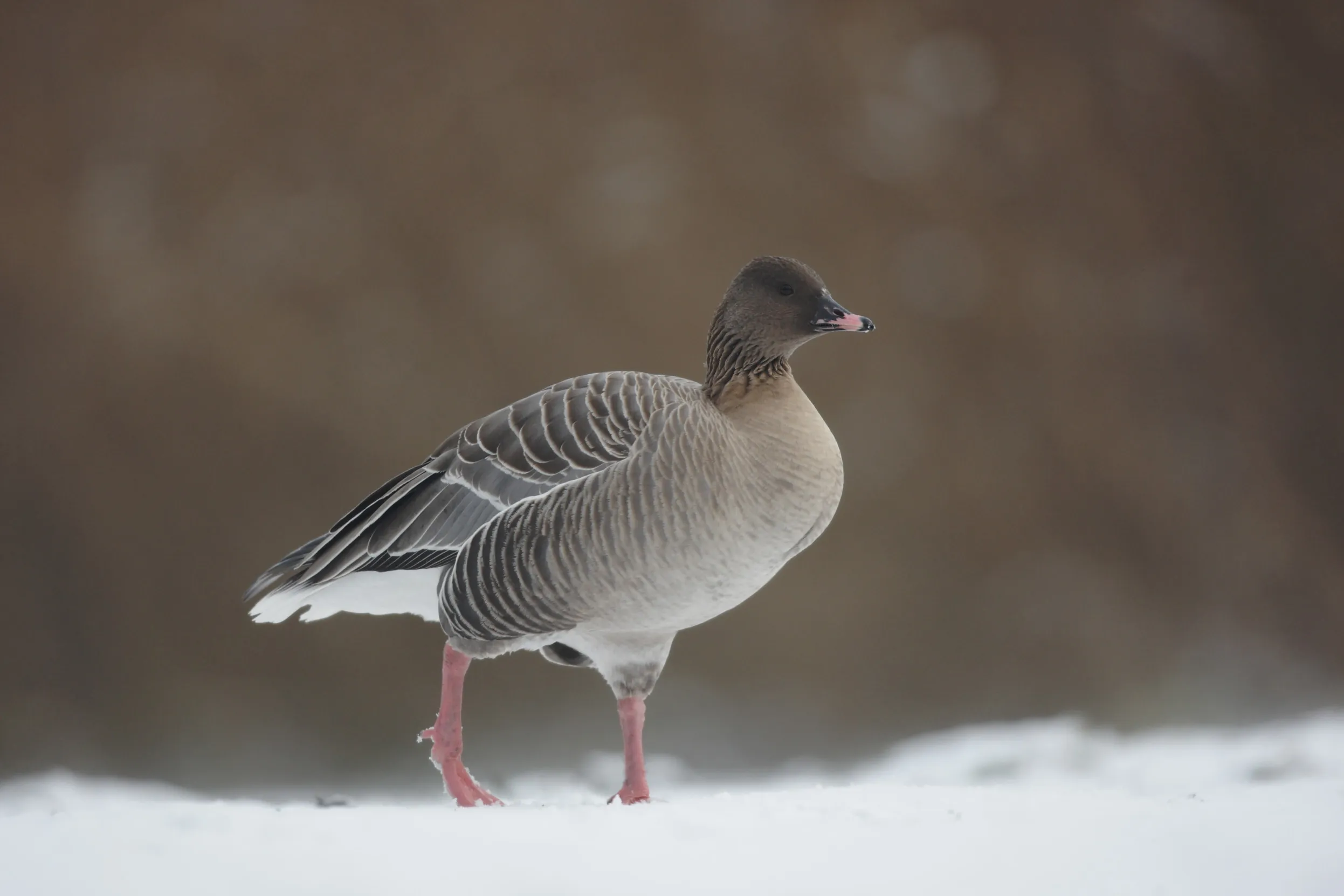
The Pink-footed Goose is a medium-sized goose, smaller than a Mute Swan but bigger than a Mallard. It is pinkish grey with a dark head and neck, a pink bill and pink feet and legs. This species does not breed in the UK, but large numbers of birds spend the winter here, arriving from their breeding grounds in Spitsbergen, Iceland and Greenland. Numbers in England are on the increase, particularly in Norfolk, probably due to better protection at winter roosts.

Call

Pink-footed Goose

Andrew McCafferty / xeno-canto

Key features to look out for

  • Pink legs and feet
  • Grey-brown body
  • Short, dark beak with a pink band

Conservation status

Pink-footed Geese are currently on the Amber List.

Where and when to see them

Difficulty rating - Easy to Medium

Large numbers of Pink-footed Geese arrive in autumn from Iceland and Greenland to spend the winter here, so in autumn wrap up warm and head out to watch some whiffling.

Look for Pink-footed Geese on estuaries, wetlands, and farmland — especially in eastern and northern England and parts of Scotland. Early mornings and late afternoons are best, when flocks are commuting to and from their feeding and roosting grounds.

Key

  1. Resident
  2. Passage
  3. Summer
  4. Winter
* This map is intended as a guide. It shows general distribution rather than detailed, localised populations.
  1. Jan
  2. Feb
  3. Mar
  4. Apr
  5. May
  6. Jun
  7. Jul
  8. Aug
  9. Sep
  10. Oct
  11. Nov
  12. Dec

Where best to see them

Pink-footed Geese, large flock of birds feeding in field
Pink-footed Geese
Birds of the month

Head outside and discover fascinating birds each month. Read on for top ID tips, what to listen for, and where to see them.

Key facts