How to identify

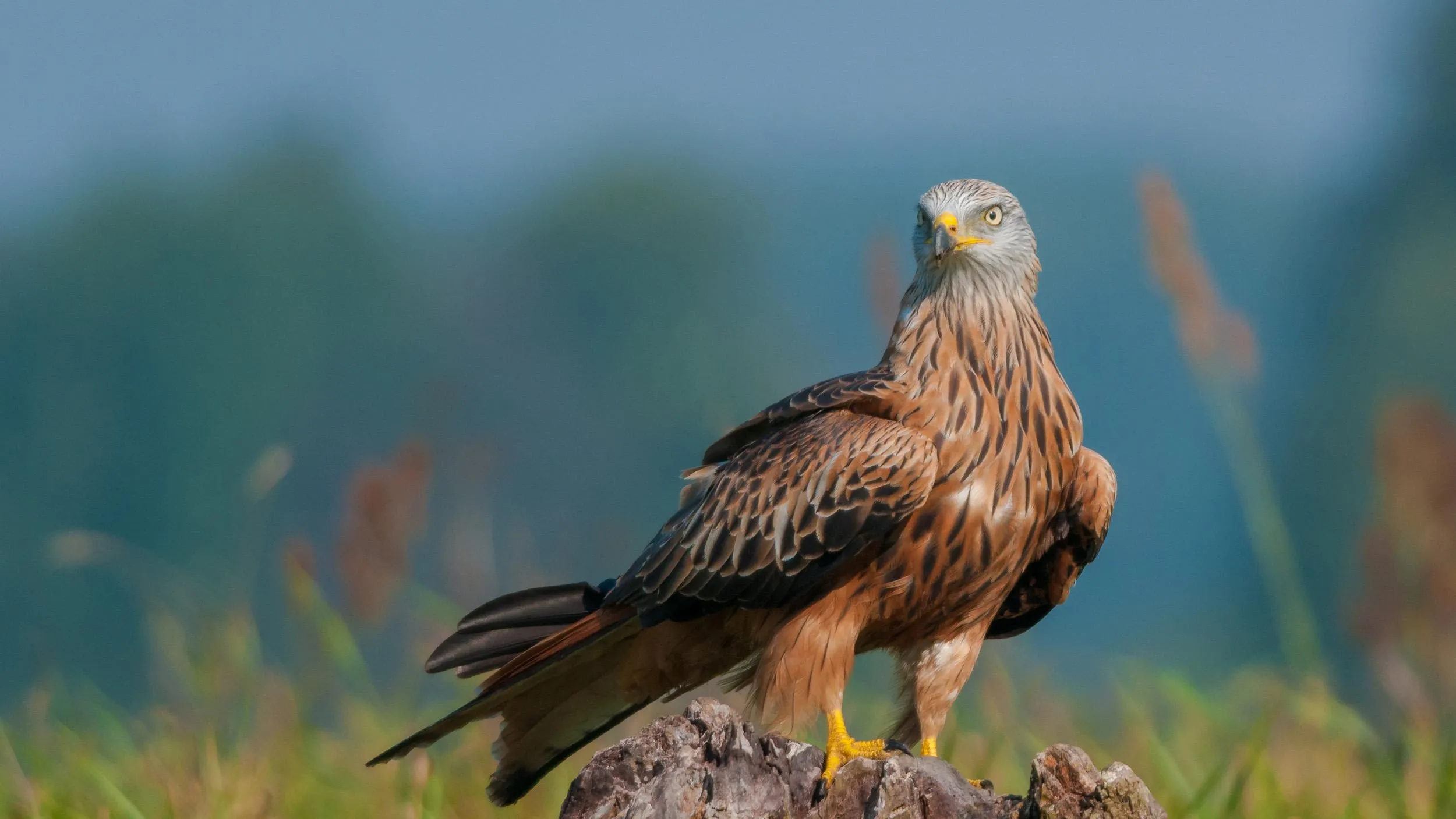
This magnificently graceful bird of prey is unmistakable with its reddish-brown body, angled wings and deeply forked tail. It was saved from national extinction by one of the world's longest-running protection programmes. It has now been successfully re-introduced to England and Scotland. Red Kites are listed under Schedule 1 of The Wildlife and Countryside Act.

Call

Red Kite

Jens Kirkeby / xeno-canto

Key features to look out for

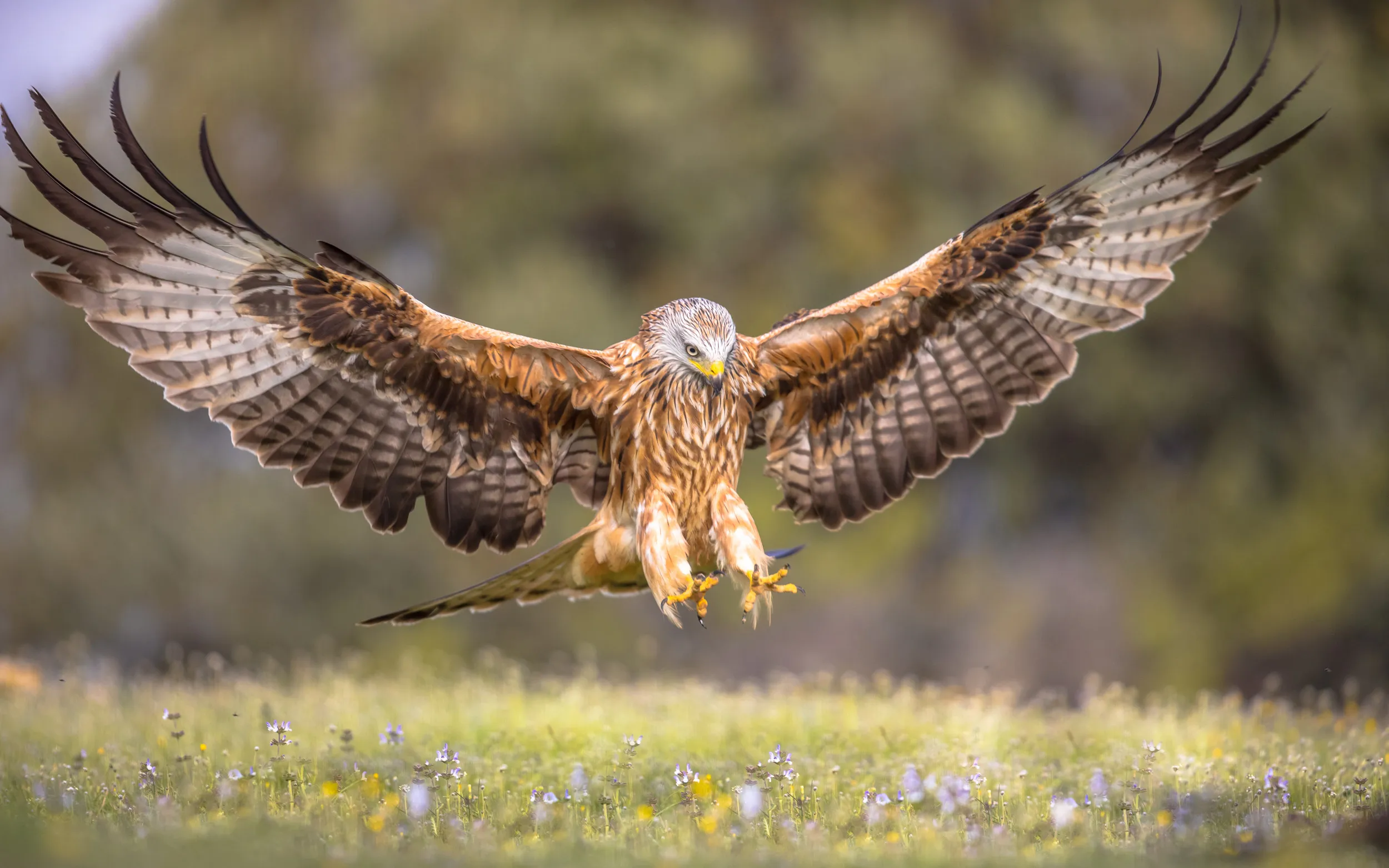
  • Distinctive long, deeply forked tail 
  • Angular wings, with white patches underneath and dark fingered wing tips  
  • Adults have a reddish-brown body with dark streaks and a pale grey head 
  • When soaring, Red Kites hold their wings flat, or slightly downcurved
  • Yellow beak with a black tip 
  • Yellow legs 
A lone Red Kite with their wings wide open and talons out ready to land on a grass meadow.
Red Kite
What’s that bird of prey

From tiny Merlins to enormous White-tailed Eagles, the UK’s birds of prey come in all shapes and sizes. These masterful predators are a real treat to see, but they’re often super-fast and many species look quite similar, which can make identifying them a challenge. In this guide, we share some simple ID tips to help you.

Conservation status

Back in Shakespeare’s day, Red Kites were really common, even in cities, where they acted as clean-up crews, catching rodents and scavenging on the scraps of meat that littered the streets. But attitudes changed and Red Kites became the victims of intense persecution. By the end of the 19th century, they were extinct in Scotland, England and Ireland, and just a few pairs were clinging on in Wales.

Thanks to reintroduction projects led by the RSPB and other organisations, Red Kites have made an astonishing comeback in the UK, with numbers increasing by 2,464% between 1995 and 2023. The UK is now home to about 17% of the world’s population.

Graphic: Red Kites have made an astonishing comeback in the UK, with numbers increasing by 2,464% between 1995 and 2023.

Where and when to see them

Difficulty rating - Easy

They’re now found across much of Wales, and central and eastern England, as well as parts of northern England, Scotland and Northern Ireland. You might see them flying over woodland, open countryside and even towns. Compared to many other birds of prey, Red Kites have relatively weak talons, so they mainly feed on carrion and can often be seen soaring over roads looking for roadkill.

Key

  1. Resident
  2. Passage
  3. Summer
  4. Winter
* This map is intended as a guide. It shows general distribution rather than detailed, localised populations.
  1. Jan
  2. Feb
  3. Mar
  4. Apr
  5. May
  6. Jun
  7. Jul
  8. Aug
  9. Sep
  10. Oct
  11. Nov
  12. Dec

Behaviour

Red Kites mainly feed on carrion and can often be seen soaring high above roads, on the lookout for roadkill. When soaring they constantly adjust the angle of their tail to steer, while barely moving their wings. Listen out for their characteristic whistling ‘peee eooo eooo’ call.

Nesting

Red Kites nest in woodlands and like to line their nests with wool, grass and twigs, but they’ll also collect other objects that catch their eye. Their nests have been found to contain all sorts of unusual items, from gloves and novelty sunglasses to cuddly toys. In Scotland, one opportunistic Red Kite even lined its nest with underwear that had been left on a bank by skinny-dippers!

Red Kite perched on the ground
Red Kite
Birds of Prey appeal

Birds of prey are being shot, trapped and poisoned across the UK. Give a regular gift and help keep them in our skies.

Red Kite feeding on hillside
Red Kite
Birds of the month

Head outside and discover fascinating birds each month. Read on for top ID tips, what to listen for, and where to see them.

Key facts